Home » Posts tagged 'Healthcare'
Tag Archives: Healthcare

How one small health care team prepared for wildfire – and what they didn’t foresee
BY CATHIE ANDERSON
Sacramento Bee
Printed – August 11, 2018
Make a list.
After evacuating two weeks ago for the Mendocino Complex Fire, hospice CEO Corrigan Gommenginger offered that advice as the most critical piece for leadership teams at small health care companies all around California.
Gommenginger has led the nonprofit Hospice Services of Lake County in Lakeport for 3 1/2 years and, in that time, wildfires have swept through swaths of his county four times. This year was different for him and his staff of 50. This was the first time they had to evacuate.
“Firefighters stopped the fire before a lot of structures, including ours, were engulfed,” said Gommenginger. “They estimate it came within an eighth of a mile. It was on the west. It was coming east toward us. …There’s a whole hillside that our office looks out on, Hopland and Cow mountains. That’s all completely burned.”
In mid-July, before the Mendocino Complex fires even began, Gommenginger and other leaders of the organization started talking about what an evacuation plan should look like. When an evacuation advisory was made a day after the Ranch and River fires chewed their way into Lake County, they said, they felt that they were as prepared as they could be. They had a list of what they should grab, what key tasks they had to perform and who was responsible for each item, Gommenginger said.
Administrator Jennifer Neylon would turn off the propane tank and gather supplies that the office and clinical staff would need.
Gommenginger would work with systems administrator Alberto Paez, developer director Janine Smith-Citron and communications liaison Kristy Weiss to disconnect all the computers and load them into their cars.
Smith-Citron would put all the patient files into her car. With Paez, she would ensure that the hospice’s temporary office in a vacant building in Middletown was set up with servers, monitors and all the other necessary equipment. Gommenginger already had asked a local property owner for permission to move in if the hospice HQ had to be evacuated.
Gommenginger would grab all the financial information and the check stock. Bills would still have to be paid, and paychecks had to be issued.
Clinical services director Heather Armstrong would begin calling patients and their family members to let them know the advisory evacuation order had been issued. She would ask them where they were going, ask them if they needed assistance, help those who needed it, tell them that the hospice would remain in touch, and remind them to take all their medications with them. If they had pets, she would refer them to Lake Evacuation & Animal Protection.
“If we were guessing and hadn’t made a list, it would have taken us hours, and we might have grabbed the wrong stuff or we might have forgotten about stuff,” Gommenginger said.
Also on his list, he said: a meeting with staff to share the plan.
“We actually had a staff meeting on the 25th of July … and we had actually gone through the whole plan with our staff,” Gommenginger said. “We said we hoped we never had to use the plan but here it is, and this is what everybody’s responsibility is if we have to evacuate.”
People seemed comforted, he said, to know the plan and who was responsible. Gommenginger said he made a point of over-communicating not only before the evacuation but during it. He held staff conference calls in the evenings to check in on his team, communicate plans and share concerns.
His team focused on its mission of caring for people who were seriously ill or dying, ensuring that nurses, social workers and home health aides could go about their clinical work. And, despite advisory and subsequently mandatory evacuation orders, Gommenginger said, the clinical staff continued to serve patients. For those who were evacuated, Gommenginger contracted with hospices serving areas where Lake County hospice’s patients had evacuated to ensure continuity of care.
The hospice already employed a nurse-staffed answering service on weekends and after hours, Gommenginger said, so he just kept the service going for the entire week that his hospice was evacuated. For days, he didn’t know whether his building had survived, but he finally got the news last week that firefighters had managed to stop the flames before they reached the building at 1862 Parallel Drive.
Despite all their planning, Gommenginger and his team said, they were met with unexpected challenges that they would warn other health-care companies to anticipate:
▪ If a fire is headed in the direction of your community, pay close attention to the gas gauge in your vehicle. Gas stations in your area may run out of gas once an advisory evacuation order is issued. Even if they don’t run out, the lines could be long and filled with people under high stress.
Smith Citron said: “My husband was really irritated with me because there was a point when we were evacuated and my car was on a quarter of a tank. It was like, ‘Whoops!’ I’m notorious for getting down to a quarter of a tank. I was traveling 25-30 miles a day back and forth from where we were evacuated to Middletown. It was not pretty.”
▪ When an evacuation order comes, pharmacies and medical supply companies will also close. There will be a run on medications at the pharmacies that remain open, and many of their supplies get depleted. In advance, advise patients that this could happen and work with them to ensure they have at least two weeks’ worth of supplies and prescriptions on hand. Think about alternative pharmacies and equipment stores.
▪ Will there be a physician who can help out patients you serve if you encounter problems getting medication for someone who needs it?
▪ If you find a temporary headquarters, how will you get internet service? It took a while before Gommenginger was able to arrange this service at his temporary headquarters, so staff had to make a lot of phone calls to ensure nurses and other field workers were apprised of latest developments on their patients.
▪ Staff should update medical records on their laptops or mobile devices each evening to ensure they have the latest updates on patients. Patients could be evacuated, Gommenginger said, and that could mean a change in schedule.
▪ The smoke-filled air is likely to lead to coughing, gravelly voices and even irritated eyes. Consider getting masks for the staff to use outside the building. Change the air conditioning filters more often than usual.
An evacuation will trigger a lot of emotions for both patients and family members, said Jo Moore, a bereavement counselor at Lake County Hospice. Individuals who are recently bereaved may struggle with the loss of a landscape where they shared so many memories with their loved one. Relatives who approve evacuations may have added stress about the impact they could have on a family member who is so near death.
And, Gommenginger added, some people may not feel comfortable taking a sickly relative with them if they have uncertain plans.
“I was actually talking with the staff at one hospital, and they said people were just dropping their loved ones off at the hospital because they couldn’t take care of them,” Gommenginger said. “People were just pulling into the emergency department and saying, ‘Here you go. We need to go.’ It was a very tragic situation for a lot of people.”


Photos by Catrina Scott, Pheeperz Photography, Lakeport

‘Dine out for Hospice’ a success
By Susan Stout, For the Record-Bee
POSTED: 12/26/17

In this season of giving and thanksgiving, Lake County residents helped to make “Dine Out for Hospice” a successful fundraiser and “friend-raiser,” according to Corrigan Gommenginger, ACHE, chief executive officer of Hospice Services of Lake County.
“It is anticipated the total funds raised will be about $8,500,” said Gommenginger. The amount reflects sponsorships, a percentage of sales from each of the seven participating restaurants, and donations from individual diners. “We are extremely grateful for the participation by the chefs and owners helping us to raise funds for Hospice Services.”
Participating eateries included the Blue Wing Saloon in Upper Lake, Giovanni’s Skyroom at Lampson Airport, Howard’s Grotto in Clearlake, Main Street Bar & Grill in Clearlake, Park Place and Renee’s Cafe, both in Lakeport, and the Saw Shop Bistro in Kelseyville.
Representatives from Hospice Services of Lake County were present at each of the restaurants to greet and thank community members for their support. The representatives included staff and agency board members who reported “a warm and friendly atmosphere” at each of the dining facilities.
Many groups of diners, including friends or acquaintances that happened to encounter each other, engaged in conversations that included past or current experiences with hospice, Hospice representatives reported. Diners mentioned their desire to support Hospice by attending the event.
“I was so impressed with the generosity of Renee’s Cafe that I wanted to be there in person to show my gratitude and support,” said President Diane Pege, MD, MMM, FACP, director of Medical Affairs, Sutter Lakeside Hospital, Lakeport. “Little did I expect the overwhelming turnout on what would usually be a slow night for the restaurant. All but two of the customers who came to dine that night came to support Hospice. Most expressed their pleasure at being able to assist our agency in this way. I am honored to have such generous partners like the owners of Renee’s in our community.”
Vice President David Neft, Lake County’s “Piano Man,” not only attended the event at the Blue Wing restaurant but donated his time to play the piano for the supportive diners. He described the experience as a “warm fuzzy” event, “a very successful evening.”
“I very much look forward to this being an annual event helping fund the critical, wonderful work of Hospice Services of Lake County,” Neft added.
Funds will help the agency to provide quality medical, emotional and spiritual services to hundreds of Lake County residents, according to Gommenginger.
National Hospice and Palliative Care month observed
Corrigan Gommenginger, ACHE
Chief Executive Officer, Hospice Services of Lake County
November is National Hospice and Palliative Care Month, and it also marks the anniversary of our own organization, Hospice Services of Lake County, formed in 1979 by a group of concerned volunteers.
Hospice Services of Lake County will mark the month with a series of articles to help bring about awareness of end-of-life issues. In addition, the organization’s annual “Light Up a Life” gatherings are scheduled for Nov. 9 in Lakeport and Nov. 16 in Middletown. We hope you’ll join us for these candle-lighting ceremonies of remembrance.
Physician Dame Cicely Saunders first used the term “hospice” to describe specialized care for dying patients. Saunders, who began her work with the terminally ill in 1948, created the first modern hospice facility, St. Christopher’s Hospice, in a suburb of London. In 1963 she introduced the idea to the United States with a visit and lecture at Yale University.
Hospice Services of Lake County started as a small organization assisting only a few patients in 1980. In 2016, our team of trained staff provided hospice care to 311 patients. 84 of those patients were veterans. This year, to date, we have provided care to 262 patients. In the past 12 months, 201 individuals including adults and children have received grief counseling in response to the loss of a family member or loved one. Trained volunteers providing patient care, bereavement services and serving as community ambassadors are an integral part of our organization. Our volunteers numbered 134 and provided 8,634 hours of service in support of our mission in 2016.
The core of hospice service is to provide patient-and family-centered care ensuring the highest quality of life at the end-of-life wherever they call home. Our specially-trained staff ensure that families receive the necessary support to allow that to happen. Services include nursing care, symptom management, and emotional and spiritual support tailored to a patient’s needs and wishes.
No patients are turned away if they do not have the means to pay for Hospice care. Services are paid for by Medicare, Medi-Cal, the Veteran’s Administration, private health insurance, personal payments, and financial support from our community through individual and corporate donations.
Hospice Services of Lake County encourages you to know your options for care and to share your wishes with family, loved ones and your professional healthcare providers. We have many services to assist you.
We encourage you to see how our compassionate team can assist you and your loved ones. We are happy to talk with you about the services that we provide and how we can help. Call us at (707) 263-6222, or visit us at 1862 Parallel Drive, Lakeport.
Additional information is also available on our website, http://www.lakecountyhospice.org.
By Corrigan Gommenginger is Chief Executive Officer, Hospice Services of Lake County
Hospice CEO earns advanced certification
By Janine Smith-Citron, For the Record-Bee
POSTED: 09/06/17
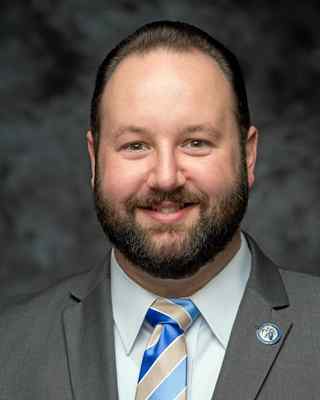
LAKEPORT >> Corrigan Gommenginger, chief executive officer of Hospice Services of Lake County, recently obtained his Advanced Certified Hospice Executive (ACHE) designation from the National Board for Home Care & Hospice Certification (NBHHC).
The ACHE designation ensures that Gommenginger “has attained a gold level knowledge of standards” by passing the NBHHC exam. The national board’s test requires that the candidate possess an advanced degree and have three years of experience as a senior executive in Hospice. According the NBHHC, only 75 percent of registrants pass the Advanced Certified Hospice Executive exam.
The extensive exam, which took Gommenginger three hours to complete, covers leadership, governance, strategic planning, organizational design, financial oversight, resource management, organizational risk, and industry trends.
“The certification is not just an accomplishment for me,” said Gommenginger. “It requires that I continue to stay current on changes in the industry that affect our organization and the patients we care for. For Hospice Services of Lake County, it is an assurance that we hire and employ the right people for the jobs.”
Gommenginger previously held the Certified Hospice Administrator designation by NBHHC, in addition to his other certifications: Certified Fund Raising Executive and Certified Executive and Leadership Development Coach.
The NBHHC notes that individuals who pass the advanced certification exam demonstrate their abilities to benefit their agencies. Such benefits include identifying trends in health care, understanding ways to improve the agency’s operational performance, and identifying new practices to integrate quality improvement, financial, operational, compliance and customer service goals.
Hospice Services staff congratulates Gommenginger on his certification.
Hospice Services of Lake County provides patient- and family-centered care ensuring the highest quality of life at the end of life. Specially-trained staff provide services include nursing care, symptom management, and emotional and spiritual support tailored to a patient’s needs and wishes. No patients are turned away if they do not have the means to pay for Hospice care. For information about Hospice Services of Lake County, call (707) 263-6222. Additional information is also available on the organization’s website, http://www.lakecountyhospice.org.

Corrigan Gommenginger to guest on Health Talk (AM 1270 KXBX) on May 18th
May 9th, 2016
Corrigan Gommenginger, CHA, Executive Director of Hospice Services of Lake County will join Bill Kerney, R.Ph. of Lake County Leader and Owner/Pharmacist at Northlake Medical Pharmacy on AM 1270 KXBX on May 18th at 10:00 AM to discuss healthcare and hospice. Tune in.


Hospice of Kitsap launches new service for homebound residents

SILVERDALE — Hospice of Kitsap County has launched a new division that will offer more services to homebound residents.
The state Department of Health issued a license this month to allow Hospice to open the new department, called Peninsula Home Care. Peninsula Home Care staff will assist with nonmedical household tasks like bathing, meal preparation, laundry and errand running.
Hospice Executive Director Corrigan Gommenginger said the nonprofit organization saw a need to give assistance to patients whose family members or caregivers aren’t able to give them full-time help at home.
“Some patients don’t have family,” Gommenginger said.
Hospice of Kitsap is rolling out the new service to its clients this summer and plans to extend the program to the general public in 2015.
The organization hired licensed practical nurse Michael Norton to head the new division. He said Peninsula Home Care will be staffed exclusively by certified nursing assistants. The aides will be on-call 24 hours a day and available for part-time or live-in care. Norton said the size of the staff will depend on the number of patients who request the service.
Clients will be assigned a dedicated caregiver in most cases.
“We’ll try to pair them up to fit situations and personalities,” Norton said.
While aiding with everyday tasks, Peninsula Home Care staff also will keep clients active, arranging transportation and helping with their hobbies.
Gommenginger said Hospice of Kitsap has been planning to add an in-home care unit for the past year. The new license makes it the only agency in the county authorized to provide nonmedical in-home care and in-home hospice care. Hospice of Kitsap also provides inpatient hospice care in Bremerton, and it recently launched a palliative care unit to improve the quality of life for patients suffering from painful illnesses.
Gommenginger said the addition of nonmedical in-home assistance will make it easier to coordinate all-around care for hospice and palliative patients.
Hospice of Kitsap is entering a competitive field with its foray into in-home care. A number of private agencies already offer home assistance in West Sound.
The organization has also faced increasing competition in the area of in-home hospice care, with Franciscan Health System joining the Kitsap market five years ago. Hospice of Kitsap still is the largest provider of hospice care in the county.
Gommenginger said the addition of Peninsula Home Care will broaden and strengthen the organization’s programs. But the main impetus remains improving quality of life for residents.
“We’re doing it to support the patients,” he said.
 BeingCorrigan.com